
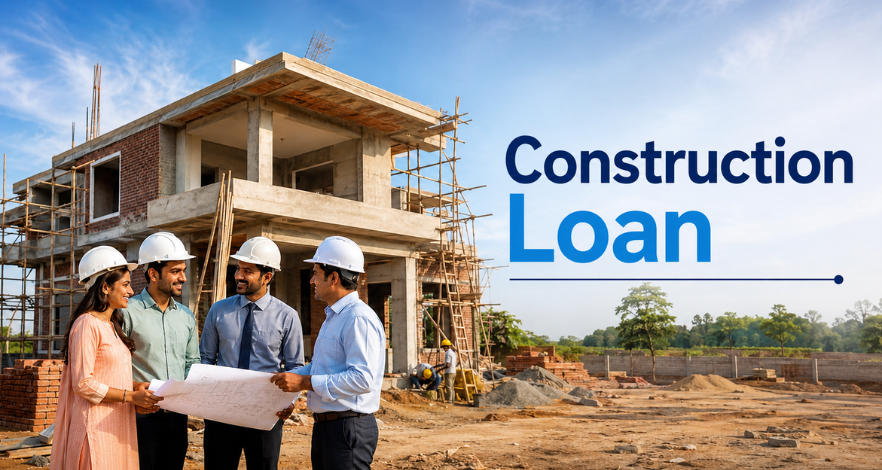
Building a home from the ground up offers the freedom to design a space exactly as you envision it, but it also requires careful financial planning since construction costs are released in stages rather than as a single lump sum. A construction loan is specifically designed to support this process, providing funds in a structured manner that aligns with your building timeline.
Understanding Construction Loans
Unlike a standard home loan, where the entire sanctioned amount is disbursed at once, a construction loan releases funds progressively as your building work advances. This staged approach protects both you and the lender, ensuring that money is used specifically for construction purposes and released only after previous stages have been verified as complete. If you already own a plot and are planning to build, this is typically the most appropriate loan product for your needs.
How Disbursement Stages Work
Most lenders structure construction loan disbursement around four to six key milestones, such as completion of the foundation, plinth level, superstructure walls, roofing, and final finishing work including flooring, plastering, and fittings. Before releasing funds for each stage, the lender usually sends a technical officer to inspect the site and confirm that the previous stage has been satisfactorily completed according to the approved building plan. This means maintaining steady progress and keeping documentation of each construction phase is essential for smooth disbursement.
Eligibility and Documentation
To qualify for a construction loan, you'll generally need to demonstrate stable income, a reasonable credit score, and clear ownership of the plot on which you're building. Documentation requirements typically include the plot's title deed, an approved building plan from local municipal authorities, a detailed cost estimate prepared by a qualified architect or engineer, and sometimes a construction agreement if you're working with a contractor. Lenders scrutinize these documents closely, since the entire loan structure depends on a clearly defined construction plan and budget.
Interest Calculation During Construction
A distinctive feature of construction loans is the pre-EMI structure used during the building phase. Rather than paying full EMIs covering both principal and interest from day one, you typically pay interest only on the amount actually disbursed at each stage. This keeps your monthly financial burden manageable while construction is ongoing. Once the building is complete and the full loan amount has been disbursed, the loan converts to a standard EMI structure covering both principal and interest.
Budgeting for Construction Costs
One of the most common challenges borrowers face is underestimating total construction costs. Material price fluctuations, labor costs, and unforeseen structural requirements can all push expenses beyond initial estimates. It's wise to build in a contingency buffer of at least ten to fifteen percent above your architect's initial cost estimate, ensuring you're not caught short partway through construction with insufficient funds to complete the project.
Working With Contractors and Technical Verification
Since disbursement is tied to verified construction progress, working with a reliable and experienced contractor is important not just for build quality but for maintaining a predictable timeline that aligns with your loan's disbursement schedule. Delays in construction don't pause your pre-EMI interest obligations, so choosing a dependable contractor and realistic project timeline helps you manage your finances more effectively throughout the building process.
Transitioning to a Full Home Loan
Once construction is complete and you receive an occupancy or completion certificate from the relevant municipal authority, your construction loan typically transitions into a standard home loan, with full EMI payments beginning at that point. It's important to confirm with your lender in advance exactly what documentation is needed to mark this transition and whether any additional processing steps or fees apply during the conversion.
Interest Rates and Comparing Lenders
Construction loan interest rates are generally comparable to standard home loan rates, though specific terms can vary based on the lender and your individual profile. Comparing offers across government banks, private banks, and NBFCs can help you identify a lender offering favorable rates along with a disbursement and inspection process that fits your construction timeline without unnecessary bureaucratic delays.
Common Mistakes to Avoid
Borrowers sometimes delay submitting technical documents needed for stage verification, which can hold up disbursement and stall construction progress. Others underestimate costs, leading to funding gaps mid-project. It's also important to ensure your building plan remains consistent with what was originally approved, since significant deviations can complicate the verification process and potentially delay subsequent loan tranches.
Why Choose Professional Guidance
Given the additional complexity involved in construction loans compared to standard home loans, working with an experienced loan advisor can make a meaningful difference. From helping you prepare accurate cost estimates and documentation to coordinating with lenders on inspection timelines, professional guidance ensures your construction project stays financially on track from groundbreaking to move-in day.
Getting Started With Your Construction Loan
If you own a plot and are ready to begin building your home, our team can help you understand eligibility requirements, prepare the necessary documentation, and compare construction loan offers across multiple lenders. With the right financial partner by your side, building your dream home can be a well-organized and financially manageable journey rather than a stressful one.