
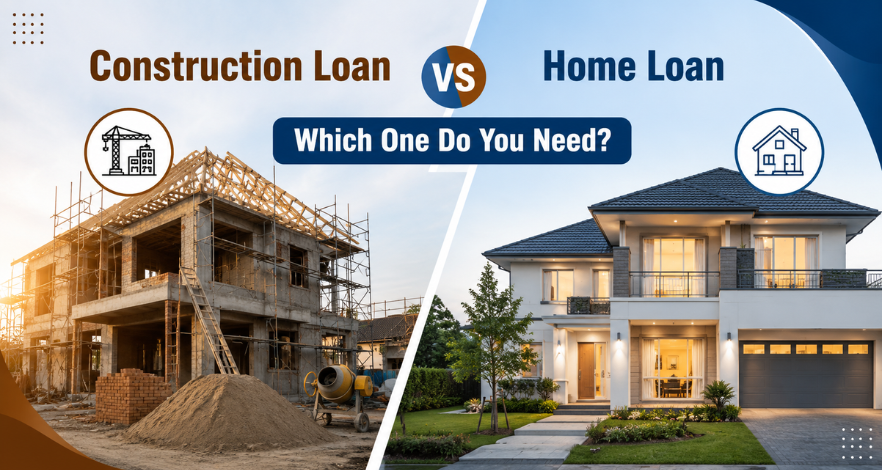
When it comes to financing a property, many people assume a home loan is the only option available, but if you're planning to build a house on a plot you already own, a construction loan is likely the more appropriate product. Understanding the difference between these two loan types can help you avoid delays, mismatched documentation, and unnecessary complications during your building project.
What Makes a Construction Loan Different
A construction loan is specifically designed for borrowers who are building a home from the ground up, rather than purchasing a ready-to-move-in property. Unlike a standard home loan, where the entire sanctioned amount is disbursed in a lump sum at possession, a construction loan is released in stages tied to the physical progress of construction. This staged disbursement protects both the lender and the borrower, ensuring funds are used specifically for building purposes rather than being disbursed upfront with no guarantee of construction progress.
How Stage-Wise Disbursement Works
Typically, lenders release funds in four to six installments corresponding to major construction milestones — such as foundation completion, plinth level, superstructure, roofing, and finishing work. Before each disbursement, the bank usually sends a technical officer to inspect the site and confirm that the previous stage has been completed satisfactorily. This means you'll need to plan your cash flow carefully, as you may need to cover certain costs upfront before the corresponding loan tranche is released.
Interest Calculation During Construction
During the construction phase, most lenders charge interest only on the amount actually disbursed, not on the full sanctioned loan amount. This is known as a pre-EMI arrangement, where you pay interest on the disbursed portion each month, and full EMI payments — covering both principal and interest — begin only once construction is complete and the entire loan amount has been disbursed. This structure keeps your monthly outgo manageable during the building phase, though it's important to budget for the transition to full EMIs once construction wraps up.
Documentation Requirements
Construction loans typically require additional documentation beyond what's needed for a standard home loan. You'll need an approved building plan from local municipal authorities, a detailed cost estimate prepared by an architect or engineer, ownership documents for the plot, and sometimes a construction agreement if you're working with a contractor. Lenders scrutinize these documents closely since the loan is tied directly to a construction timeline, and any deviation from the approved plan can delay subsequent disbursements.
When a Standard Home Loan Makes More Sense
If you're purchasing a ready-built house, an apartment, or a property under construction from a developer with an existing payment schedule, a standard home loan or a builder-linked construction-cum-home loan is usually more appropriate. In these cases, the developer often has direct arrangements with lenders, simplifying the disbursement process since it follows the builder's own construction milestones rather than requiring independent technical inspections.
Transitioning from Construction Loan to Home Loan
Once construction is complete and you receive an occupancy or completion certificate, your construction loan typically converts into a standard home loan, with full EMIs beginning at that point. It's worth confirming with your lender in advance how this transition works, what documentation is required to mark construction as complete, and whether any additional fees apply during the conversion process.
Common Pitfalls to Avoid
Borrowers sometimes underestimate construction costs, leading to funding gaps between what the loan covers and what's actually needed to complete the building. It's wise to build in a buffer of at least ten to fifteen percent above your initial cost estimate. Delays in construction can also affect your pre-EMI payments, since interest continues to accrue on disbursed amounts regardless of whether the project is on schedule, so working with a reliable contractor and realistic timeline is essential.
Making the Right Choice
If you already own a plot and are planning to build, a construction loan's stage-wise disbursement and pre-EMI structure will likely serve you better than a standard home loan. However, if you're buying a completed or developer-built property, a traditional home loan remains the simpler and more suitable option. Speaking with a loan advisor who understands both products can help you choose correctly from the start, avoiding paperwork mismatches and processing delays down the line.